
Currently Empty: $0.00
 Accentrex Global
- June 30, 2026
- Comment 0
How Kohei Kadowaki’s ‘We Are Aliens’ Celebrates the Friendships Time Could Never Erase
In an era where blockbuster animation often relies on dazzling visual effects, high-speed action, and extravagant fantasy worlds, Japanese animator Kohei Kadowaki has chosen a completely different path. His animated short film We Are Aliens, selected for the prestigious Annecy International Animation Film Festival 2026, reminds audiences that some of the most profound stories are built not on spectacle, but on ordinary human emotions.
The film quietly explores the bittersweet reality of childhood friendships that slowly disappear with time. It captures how growing older changes people’s lives, careers, families, and identities—but somehow leaves childhood memories untouched.
Rather than offering dramatic twists or emotional manipulation, We Are Aliens invites viewers into a deeply personal journey where silence often speaks louder than words.
Its international recognition at Annecy has positioned Kohei Kadowaki among the emerging voices redefining contemporary animated storytelling.
A Story That Every Adult Can Relate To
At the heart of We Are Aliens lies a remarkably simple premise.
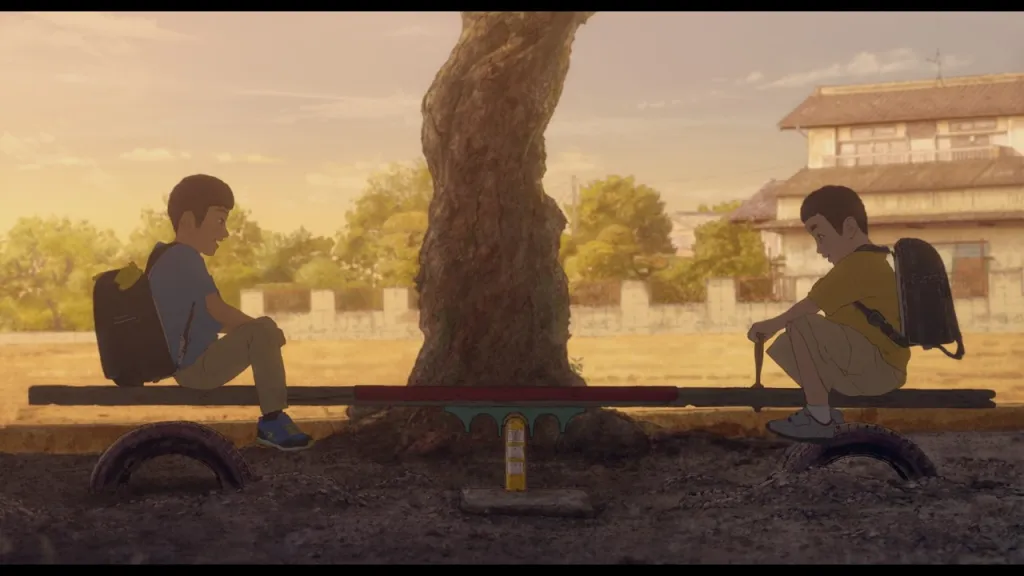
Two inseparable childhood friends spend their elementary school years together before life gradually pulls them in different directions. Without arguments or dramatic goodbyes, they simply drift apart—as countless friendships often do.
Thirty years later, fate unexpectedly reunites them.
The reunion becomes less about catching up and more about rediscovering forgotten parts of themselves.
Years of adulthood suddenly collapse into a few shared memories.
Old conversations feel unfinished.
Childhood jokes suddenly make sense again.
The awkwardness of strangers slowly transforms into the comfort of lifelong companions.
Instead of asking why friendships end, the film asks a more profound question:
Can genuine friendship ever truly disappear?
Why the Title ‘We Are Aliens’ Matters
The title initially appears mysterious.
Viewers may expect science fiction, fantasy creatures, or extraterrestrial themes.
Instead, the “aliens” represent something far more human.
Kohei Kadowaki intentionally selected an ambiguous title that would gain meaning only after audiences experienced the story.
By the film’s conclusion, the audience realizes that people often become strangers—even to those they once knew best.
Years of separation create emotional distance.
Different careers.
Different cities.
Different families.
Different dreams.
When old friends finally reunite, they almost feel like meeting completely new people.
In that sense, everyone becomes an “alien” to someone they once loved.
The title evolves from confusion into emotional clarity—a storytelling technique rarely executed so effectively.
Nostalgia Without Romanticising the Past
Many films use nostalgia merely as decoration.
Old bicycles.
School uniforms.
Cassette tapes.
Vintage music.
We Are Aliens treats nostalgia differently.
Rather than idealising childhood, the film recreates its emotional atmosphere.
Kohei Kadowaki explained that he wanted viewers to almost “smell” childhood.
This sensory approach extends far beyond visuals.
Every quiet street.
Every afternoon sunset.
Every classroom.
Every playground.
Every awkward silence between friends.
Together they recreate experiences that many adults have forgotten but immediately recognize once they appear on screen.
The film never tells viewers to miss childhood.
Instead, it simply reminds them that those memories continue shaping who they are today.
A Masterclass in Emotional Minimalism
One of the film’s greatest strengths is its restraint.
Modern storytelling often depends upon emotional climaxes, dramatic speeches, or shocking revelations.
Kadowaki deliberately avoids all of them.
The emotional impact comes from subtle gestures.
Small smiles.
Lingering glances.
Long pauses.
Shared memories.
Moments where nothing significant appears to happen—yet everything changes emotionally.
This understated style reflects the broader tradition of Japanese storytelling, where silence often communicates emotions more powerfully than dialogue.
Instead of forcing audiences to cry, We Are Aliens trusts viewers to find their own memories reflected in its scenes.
That trust becomes one of its greatest artistic achievements.
Building Emotion Through Visual Storytelling
Kohei Kadowaki took on multiple creative responsibilities during production.
He served as:
- Director
- Animation Director
- Art Director
- Colour Designer
- Editor
This rare level of creative control allowed him to maintain a consistent emotional language throughout the film.
The colour palette subtly changes as time progresses.
Warm childhood colours gradually evolve into calmer, muted adult tones.
Lighting shifts naturally alongside emotional development.
Frame composition slows during moments of reflection.
Every artistic decision supports the story rather than distracting from it.
The result is animation that feels deeply cinematic while remaining intimate.
Annecy Recognition Elevates the Film’s Global Profile
Being selected for the Annecy International Animation Film Festival represents a major milestone for any filmmaker.
Often described as the “Cannes of Animation,” Annecy showcases some of the world’s finest animated works from independent creators, major studios, universities, and emerging talents.
Selection alone signals exceptional artistic quality.
For Kohei Kadowaki, Annecy represents more than professional recognition.
It fulfills a childhood dream.
The animator has openly spoken about admiring the festival since he first became interested in animation.
Having We Are Aliens screened alongside the world’s leading animated productions marks a defining moment in his career.
Industry observers believe the recognition could open opportunities for larger international collaborations in the future.
From Painter to Animator
Interestingly, animation was not Kohei Kadowaki’s original career plan.
As a child, he dreamed of becoming a painter.
Everything changed after watching a Doraemon film during his teenage years.
The experience revealed that animation could combine painting, storytelling, movement, music, and emotion into a single artistic language.
That realization redirected his creative ambitions entirely.
Instead of simply creating beautiful images, he wanted to tell stories capable of moving audiences emotionally.
Years later, We Are Aliens reflects that philosophy perfectly.
Every frame feels handcrafted with the care of a painter while serving the narrative purpose of cinema.
The Challenge Behind Independent Animation
Creating an animated film is rarely easy.
Independent productions demand extraordinary patience.
Unlike large studio productions with hundreds of artists, independent filmmakers often juggle multiple creative responsibilities simultaneously.
Kadowaki has described long working days filled with endless revisions, animation reviews, editing sessions, colour adjustments, and layout refinements.
The production process became physically exhausting.
Yet what kept the team motivated were simple moments away from work.
Late-night meals.
Shared conversations.
Small jokes between colleagues.
Mutual belief in the project.
Ironically, the friendships formed during production mirrored the emotional themes explored within the film itself.
Interesting Reads
Old friends, new frames: Japanese animator Kohei Kadowaki turns a decades-long silence into Annecy gold
Content Creation: The New Backbone of Film, Television, and Digital Entertainment in India
Why Audiences Around the World Connect With the Story
Although deeply rooted in Japanese culture, We Are Aliens tells a universal story.
Nearly everyone has experienced friendships that faded without explanation.
People move away.
Schools end.
Careers begin.
Families grow.
Phone numbers change.
Life becomes busy.
One day, decades have passed.
The film acknowledges that reality without assigning blame.
Instead, it gently suggests that genuine emotional connections never disappear entirely.
Sometimes all they need is one unexpected reunion.
This universality explains why audiences across different cultures have embraced the film despite its quiet narrative style.
A Different Direction for Modern Animation
Animation today increasingly serves blockbuster entertainment.
Large franchises dominate global box offices.
Streaming platforms compete through visually spectacular productions.
Against that backdrop, We Are Aliens represents another future for animation.
One where emotional authenticity becomes more valuable than visual excess.
One where silence matters.
One where ordinary lives become extraordinary stories.
Its success reinforces the growing international appreciation for smaller, artist-driven animated films that prioritise emotional depth over commercial spectacle.
The Future of Kohei Kadowaki
Following Annecy, Kohei Kadowaki has expressed interest in exploring even more experimental visual techniques.
He hopes to push animation beyond conventional character design while maintaining emotional accessibility.
Future projects may incorporate:
- More unconventional artistic styles
- Fluid visual experimentation
- Minimal dialogue
- Stronger sensory storytelling
- Innovative animation techniques
If We Are Aliens is any indication, audiences can expect future works that continue blending emotional realism with artistic innovation.
Animation critics already view him as one of Japan’s promising emerging filmmakers capable of expanding the language of independent animation.
Why ‘We Are Aliens’ Matters Beyond Film Festivals
The true success of We Are Aliens lies not only in festival recognition but in the conversations it inspires afterward.
It encourages viewers to think about people they once knew.
Old classmates.
Childhood neighbours.
Best friends who slowly disappeared from daily life.
The film reminds audiences that relationships often shape our identities long after communication ends.
It also challenges the assumption that animation is only for children.
Like the finest works of Japanese animation, We Are Aliens demonstrates that animated storytelling can explore adulthood, loneliness, nostalgia, identity, and emotional healing with remarkable sophistication.
Its quiet storytelling proves that animation remains one of cinema’s most powerful mediums for expressing deeply human experiences.
Conclusion
Kohei Kadowaki’s We Are Aliens stands as one of the most emotionally resonant animated shorts of 2026. Through a simple story about two childhood friends separated by time, the film explores universal themes of memory, identity, nostalgia, and human connection with extraordinary sensitivity.
Its selection at the Annecy International Animation Film Festival marks a significant milestone not only for Kadowaki’s career but also for independent animation that values emotional authenticity over spectacle. In an increasingly fast-paced digital world, We Are Aliens reminds audiences that some of life’s most meaningful stories unfold quietly—in memories, reunions, and the friendships that continue to shape us long after childhood has ended.
