
Currently Empty: $0.00
 Accentrex Global
- July 13, 2026
- Comment 0
When a YouTuber Becomes the Story
The digital revolution has fundamentally transformed journalism. Traditional newspapers and television networks are no longer the sole gatekeepers of information. Today, independent creators on platforms like YouTube, X (formerly Twitter), TikTok, and Twitch command audiences that rival or even surpass major media organizations.
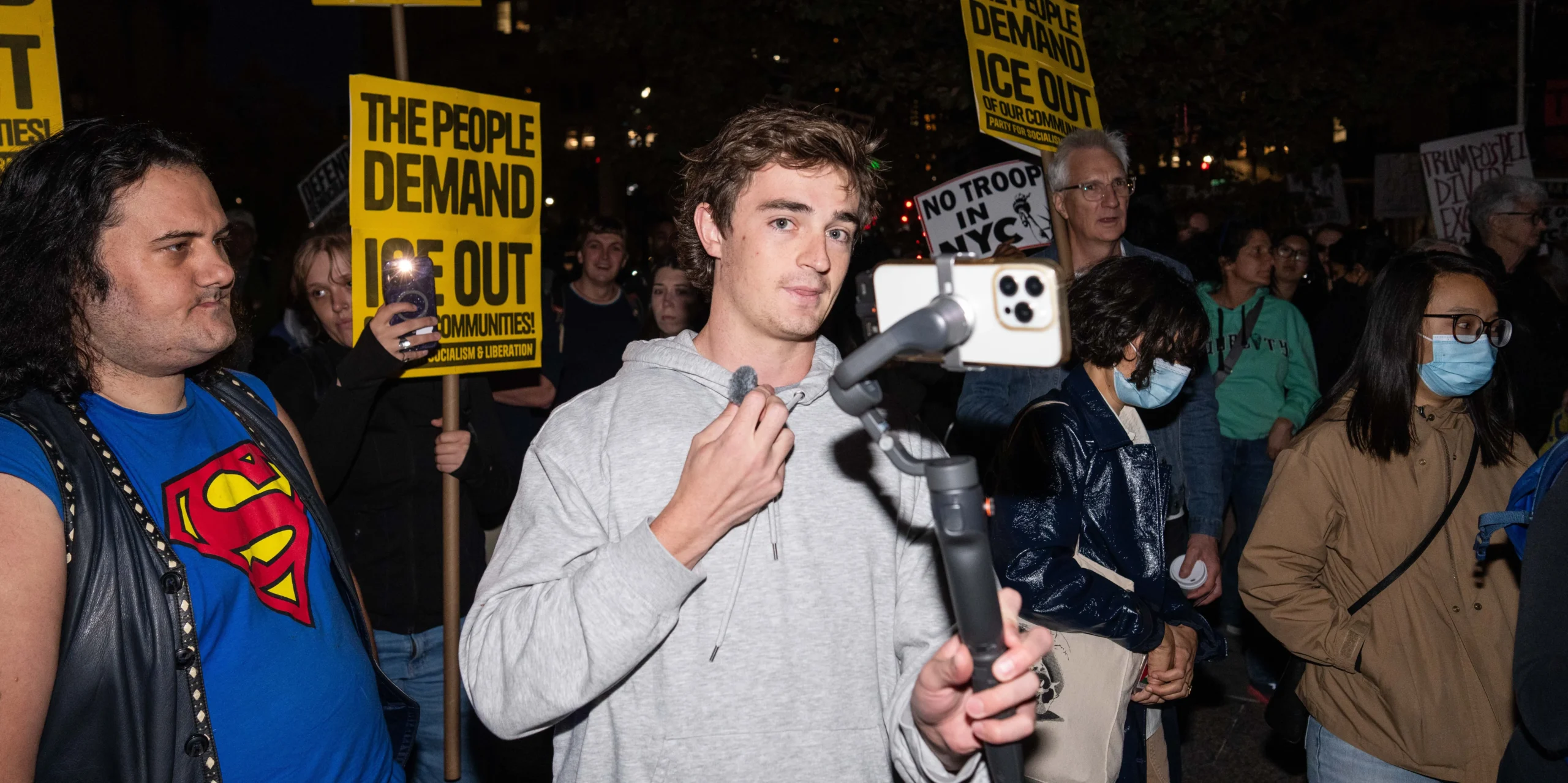
This shift became especially evident after a viral investigative video by 23-year-old YouTuber Nick Shirley, whose exploration of alleged daycare fraud in Minnesota sparked nationwide debate about the role of independent journalism, political influence, and the future of media credibility.
Within days, the video attracted millions of views and endorsements from influential figures, including entrepreneur Elon Musk, US Vice President J.D. Vance, and FBI Director Kash Patel. Supporters hailed Shirley as proof that independent creators can expose stories overlooked by mainstream media. Critics, however, questioned the accuracy of his reporting, the political motivations behind it, and the broader consequences of viral investigations conducted outside established journalistic standards.
The controversy has evolved into a larger discussion: Can YouTubers replace traditional journalists, or does the future of journalism require a balance between both?
The Investigation That Captured National Attention
Nick Shirley built his online reputation by creating immersive, on-the-ground videos that combine travel, documentary storytelling, and investigative reporting. Unlike conventional news reporters who rely heavily on interviews and official statements, Shirley’s style places viewers directly into the action.
In his Minnesota investigation, Shirley visited multiple daycare centers allegedly linked to taxpayer-funded childcare fraud. Accompanied by a collaborator identified only as “David,” he questioned employees, entered facilities, and attempted to verify claims about government funding.
One of the video’s most viral moments occurred when Shirley approached a daycare center displaying a misspelled sign reading “Quality Learing Center.” According to his companion, the center had allegedly received millions of dollars in taxpayer funding despite questions surrounding its operations.
The situation escalated when a woman mistakenly believed Shirley and his team were federal immigration agents and warned people inside not to open the doors.
The dramatic encounter quickly spread across social media, becoming one of the defining clips that propelled the investigation into national headlines.
Why Millions Watched
The video’s success was not solely driven by the allegations themselves. Rather, it showcased a new style of storytelling that resonates strongly with digital audiences.
Unlike traditional investigative reports that often rely on lengthy documents, data analysis, and carefully structured narratives, Shirley’s content unfolded in real time. Viewers experienced uncertainty, confrontation, and discovery alongside the creator.
This immersive format creates a sense of authenticity. Audiences often feel they are witnessing events firsthand rather than consuming edited news packages prepared by television networks.
Social media algorithms further amplified the video’s reach. High-profile personalities shared clips with millions of followers, introducing Shirley’s investigation to audiences far beyond his subscriber base.
In today’s digital landscape, engagement frequently outweighs institutional reputation. Emotional storytelling, suspense, and direct confrontation can generate significantly more attention than detailed investigative reports.
Questions Over Accuracy
Despite its popularity, the investigation quickly attracted scrutiny.
Journalists from the Minneapolis Star Tribune independently visited many of the same daycare centers highlighted in Shirley’s video. Their reporting acknowledged that Minnesota has experienced documented cases of childcare fraud over several years, with dozens of individuals previously convicted through federal and state investigations.
However, the newspaper reported finding no evidence that the specific daycare centers featured in Shirley’s investigation were engaged in the alleged fraudulent activities portrayed in the video.
Instead, reporters found that while some facilities had previously received safety violations and regulatory citations, these issues differed significantly from the claims of widespread financial fraud presented in the YouTube investigation.
The contrast illustrated one of journalism’s oldest challenges: sensational visuals often attract far greater public attention than meticulous verification.
Interesting Reads
What a Viral YouTube Video Says About the Future of Journalism
Political Controversy Emerges
The debate intensified after reports suggested potential political connections behind the investigation.
According to statements made by Minnesota House Republican leadership, members of the party allegedly assisted Shirley by recommending daycare centers to investigate.
Shirley publicly denied these claims, insisting he had conducted the investigation independently and had no relationship with state political leaders.
Further reporting by investigative journalists later suggested that Shirley’s collaborator may have had political affiliations connected to Minnesota’s Republican Party.
Although none of these claims conclusively established political coordination, the revelations fueled questions about transparency and independence.
In traditional journalism, news organizations generally disclose potential conflicts of interest, funding sources, and editorial oversight. Independent creators, however, operate under far fewer disclosure requirements, making it more difficult for audiences to evaluate possible biases.
The Government Response
The video’s impact extended beyond social media.
Shortly after it gained widespread attention, the Trump administration temporarily paused certain federal payments related to daycare programs while reviewing potential fraud concerns.
Supporters viewed the move as evidence that independent journalism could drive government accountability more effectively than traditional media.
Critics argued that existing investigations into Minnesota daycare fraud had already been underway for years and that Shirley’s video merely amplified an issue already known to law enforcement.
Regardless of interpretation, the incident demonstrated the extraordinary influence digital creators now possess.
A single viral investigation by an independent YouTuber helped shape national political conversation within days.
Journalism Has Never Been More Competitive
Historically, investigative journalism required substantial institutional support.
Newsrooms employed teams of reporters, editors, lawyers, researchers, and fact-checkers. Investigations often took months or even years before publication.
Today’s technology has dramatically lowered those barriers.
Affordable cameras, smartphones, drones, livestreaming platforms, AI-powered editing software, and social media distribution enable individual creators to produce investigative-style content from almost anywhere.
Instead of waiting for newspapers to publish stories, audiences increasingly consume information directly from creators who document events in real time.
This shift represents one of the most significant changes in journalism since the rise of television news.
However, accessibility also introduces new risks.
Without editorial oversight, creators may unintentionally spread misinformation, overlook essential context, or prioritize engagement over verification.
The Rise of Citizen Journalism and Independent Creators
The rapid growth of platforms such as YouTube, TikTok, X (formerly Twitter), Instagram, and Twitch has transformed ordinary individuals into influential storytellers. Unlike traditional news organizations, independent creators can publish content instantly, engage directly with audiences, and build loyal communities around their reporting.
This evolution has given rise to what is commonly known as citizen journalism—news gathering and reporting carried out by individuals rather than established media organizations.
In many situations, citizen journalists have played an important role in documenting breaking events before mainstream media could arrive on the scene. From natural disasters and protests to corruption investigations and local governance issues, independent creators have often delivered valuable first-hand information.
However, the Minnesota daycare controversy highlights an important distinction between reporting an event and conducting an investigative journalism project. While both involve gathering information, investigative journalism requires extensive verification, corroborating evidence, legal scrutiny, and editorial oversight.
Independent creators may not always have access to these institutional safeguards.
Why Traditional Journalism Still Matters
Although legacy media organizations have faced declining trust and shrinking newsrooms, they continue to play a critical role in democratic societies.
Professional investigative journalists spend weeks—or sometimes years—examining public records, interviewing multiple sources, filing Right to Information (RTI) requests, analysing financial documents, and consulting legal experts before publishing sensitive investigations.
Editors review every claim. Lawyers evaluate potential legal risks. Fact-checkers verify names, figures, dates, and evidence.
These layers of scrutiny reduce the likelihood of publishing inaccurate or misleading information.
By contrast, many digital creators operate independently without formal editorial processes. While this allows them to publish quickly, it also increases the possibility of errors, incomplete context, or unverified allegations reaching millions of viewers before corrections can be made.
The Minnesota case illustrates this challenge. Although fraud in the state’s childcare system had previously been documented through official investigations, subsequent reporting questioned whether the specific daycare centres featured in the viral video were involved in the alleged misconduct.
This demonstrates why speed should not replace verification.
Algorithms Reward Emotion Over Accuracy
One of the defining characteristics of today’s digital media ecosystem is the role of recommendation algorithms.
Platforms such as YouTube, TikTok, Facebook, and X prioritise content that keeps users engaged for longer periods. Videos featuring confrontation, surprise, controversy, and emotional storytelling generally perform better than detailed analytical reports.
This creates powerful incentives for creators.
Rather than spending months investigating complex financial records, some may focus on producing dramatic encounters that generate immediate attention.
Headlines become more sensational.
Videos become more confrontational.
Complex policy issues are simplified into easily shareable narratives.
While this strategy may increase engagement, it does not necessarily improve public understanding.
Journalism’s primary responsibility has always been to inform—not merely to entertain.
Maintaining that balance has become increasingly difficult in an era where algorithms reward attention above almost everything else.
The Growing Influence of Independent Investigators
Despite the concerns, independent investigative creators have demonstrated remarkable potential.
Several YouTube channels have exposed cryptocurrency scams, investment fraud, counterfeit businesses, online misinformation, and consumer protection issues.
Creators such as Coffeezilla, for example, have earned international recognition for exposing fraudulent financial schemes through meticulous research and interviews.
Similarly, sports journalist Pablo Torre has successfully adapted investigative storytelling into long-form digital video, attracting audiences that traditional television networks increasingly struggle to reach.
These examples demonstrate that independent journalism is not inherently less credible than traditional reporting.
The determining factor is methodology.
Creators who verify evidence, cite documents, interview multiple perspectives, and correct mistakes when necessary can produce work comparable to professional investigative journalism.
Conversely, creators who prioritise sensationalism over evidence risk undermining public trust.
Political Polarisation and the Information War
The Minnesota investigation also illustrates how journalism increasingly intersects with politics.
Within hours of the video’s publication, prominent political figures amplified its claims across social media.
Supporters argued that independent creators were exposing truths ignored by mainstream media.
Critics accused politicians of selectively promoting content that aligned with their ideological narratives.
This dynamic is becoming increasingly common worldwide.
Rather than relying solely on traditional press conferences or television interviews, political leaders now communicate directly through social media influencers, podcasters, YouTubers, and independent commentators.
This strategy allows governments and political movements to bypass established media gatekeepers.
While greater diversity of voices can strengthen democratic debate, it also raises questions about accountability.
Unlike regulated news organisations, many digital creators are not required to disclose funding sources, political affiliations, sponsorship arrangements, or editorial partnerships.
Transparency therefore becomes even more important.
Artificial Intelligence Will Further Transform Journalism
The next phase of journalism will almost certainly be influenced by artificial intelligence.
AI-powered tools already assist journalists with transcription, language translation, data analysis, document searches, video editing, and audience engagement.
Independent creators have embraced these technologies rapidly.
However, AI also presents new risks.
Deepfake videos, AI-generated images, synthetic voices, and fabricated documents can make misinformation appear increasingly convincing.
The same technologies that improve productivity can also enable sophisticated propaganda campaigns.
As AI-generated content becomes more common, audiences will need stronger media literacy skills to distinguish verified reporting from manipulated narratives.
Credibility, transparency, and evidence will become even more valuable than they are today.
The Future Is Collaboration, Not Replacement
The debate surrounding Nick Shirley’s investigation should not be viewed as a competition between YouTubers and traditional journalists.
Instead, it highlights the possibility of a hybrid future.
Traditional media organisations possess investigative expertise, editorial standards, legal resources, and institutional credibility.
Independent creators offer speed, accessibility, audience engagement, innovative storytelling, and global digital reach.
Rather than replacing one another, these strengths could complement each other.
Some major news organisations are already partnering with digital creators, incorporating video-first storytelling, podcasts, livestreams, and social media reporting into their editorial strategies.
Likewise, independent journalists increasingly collaborate with researchers, legal experts, and experienced editors to strengthen their investigations.
The future of journalism is unlikely to belong exclusively to either legacy media or independent creators.
It will belong to those who combine technological innovation with rigorous reporting standards.
Conclusion
Nick Shirley’s Minnesota investigation has become more than a viral YouTube video—it has become a case study in the changing nature of journalism.
It demonstrates the enormous influence independent creators now wield, the opportunities digital platforms provide for investigative storytelling, and the risks associated with publishing unverified or politically charged content without sufficient editorial oversight.
As audiences increasingly consume news through social media rather than newspapers or television, trust will become journalism’s most valuable currency.
Whether stories are reported by international news organisations, local newspapers, independent YouTubers, or citizen journalists, the principles remain unchanged: verify facts, provide context, remain transparent, and hold power accountable.
The future of journalism will not be defined by who publishes first, who has the largest newsroom, or who garners the most views. It will be shaped by those who earn and maintain public trust through accuracy, fairness, and responsible reporting in an increasingly digital world.
